
Illustration guide · 5 styles · 1 character · real outputs
Children's Book Illustration Styles, Compared on the Same Page
Most guides to children's book illustration styles show a different book for every style, so you end up comparing artists instead of styles. This one keeps everything else still. Pip, a small teal robot we made up, stands in the same rainy garden holding the same cabbage leaf over the same seedling, and only the style changes.
All five pictures below came out of our storybook generator, one try each, with nothing retouched. Under each one you'll find what held steady, what drifted, the ages it suits best, and a button that loads the same story in that style so you can make your own version.
Same Robot, Same Rainy Page, Five Styles
The page text was identical for four of the five books: "At noon, dark clouds gathered and the rain came pouring down. Pip held a wide cabbage leaf over the seedling like an umbrella." In the cartoon book the page break fell one sentence later, so that page also mentions the rainbow, yet the picture still shows the rain. Pip's look came from one saved character, so each book started from the same description and reference picture.
Look at the eyes, the leaf antenna and the wheels first. Those small, specific details are where a character either survives a style change or quietly turns into someone else.
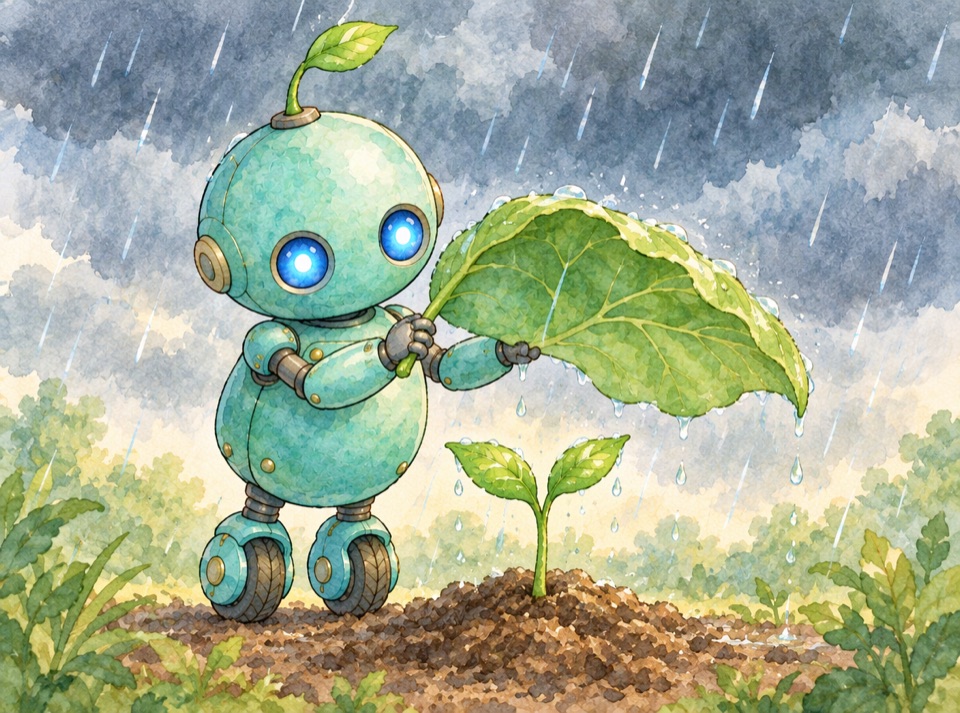 WatercolorAges 0–6Soft washes, grainy paper texture, muted greys and greens
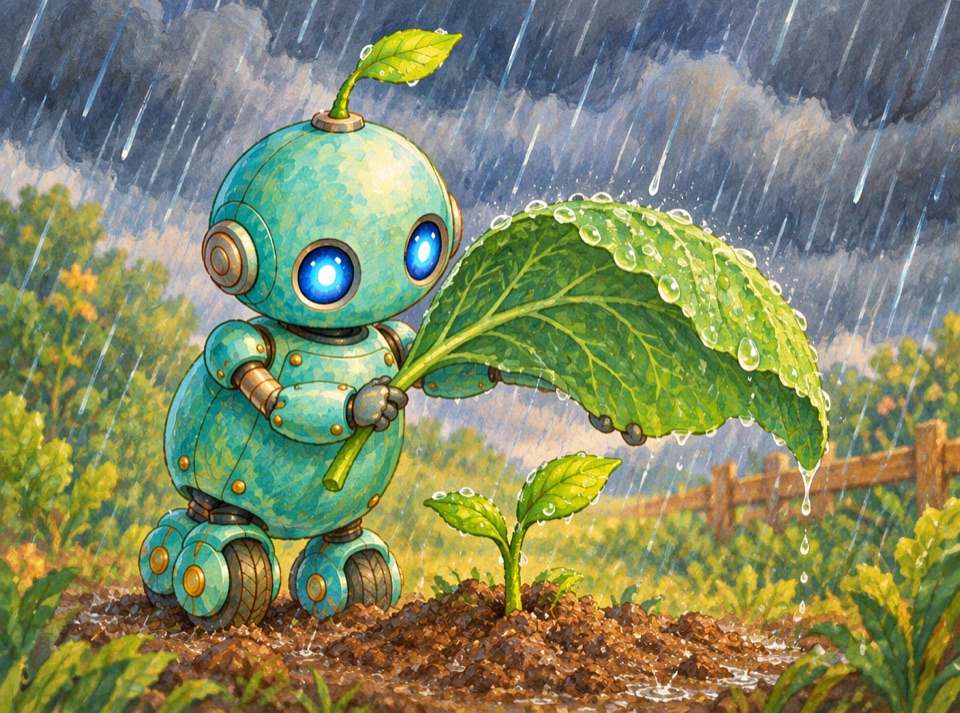 Classic picture bookAges 3–8Textured painted strokes, warm light, the most background detail
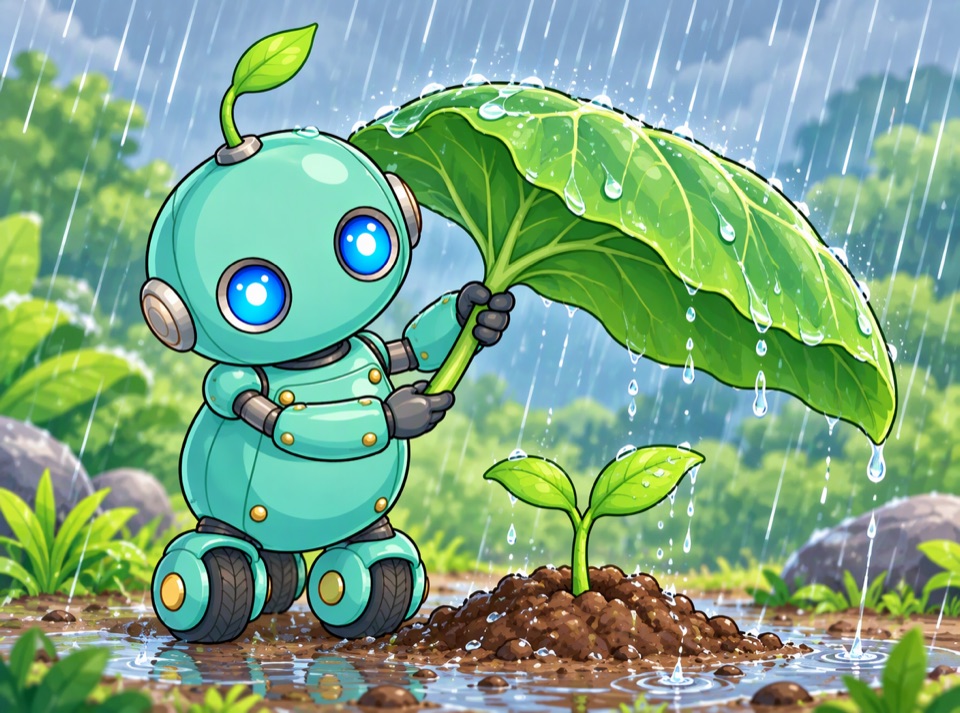 CartoonAges 3–7Bold outlines, flat bright color, glossy highlights
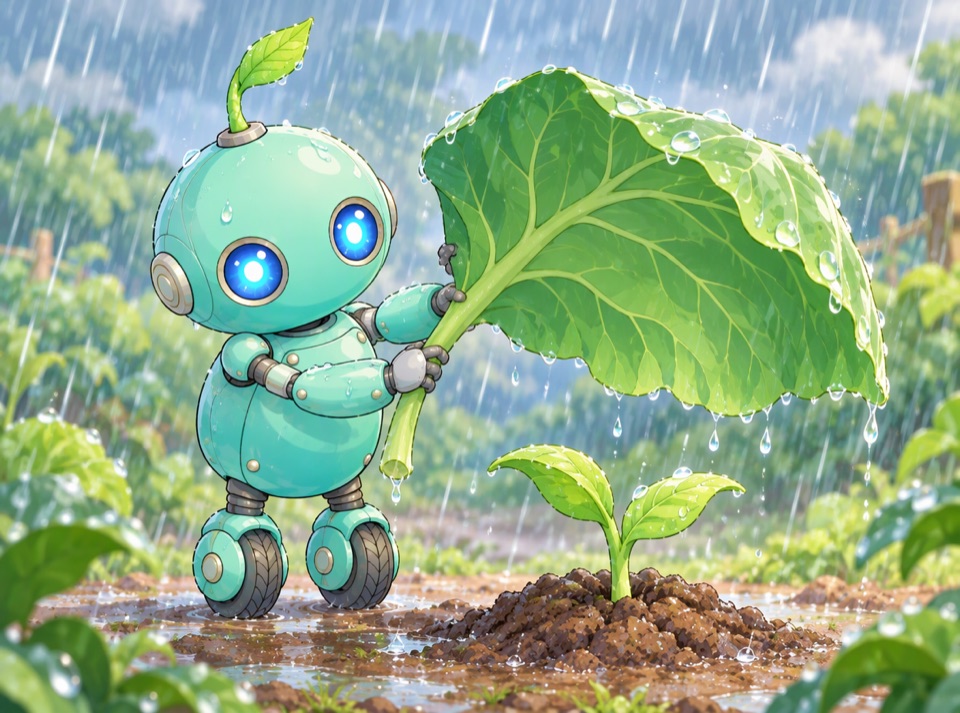 AnimeAges 6–12Fine clean lines, glossy light, detailed raindrops
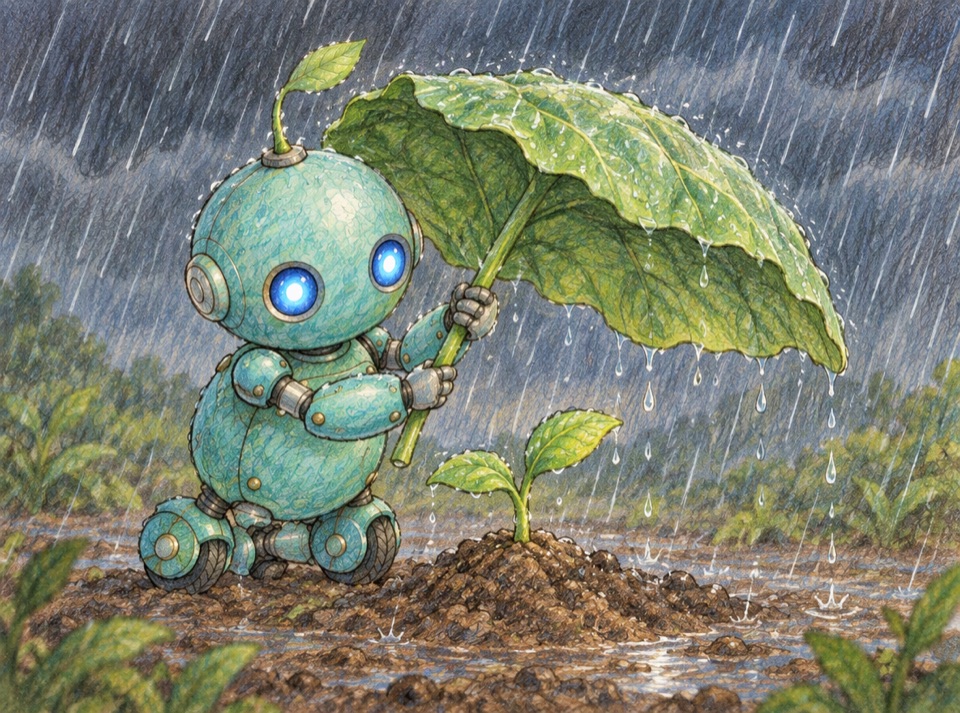 Pencil sketchAges 5–10Colored pencil hatching, visible strokes, darker mood
Watercolor: Soft, Quiet and Close to the Paper
Page text: “At noon, dark clouds gathered and the rain came pouring down. Pip held a wide cabbage leaf over the seedling like an umbrella.”
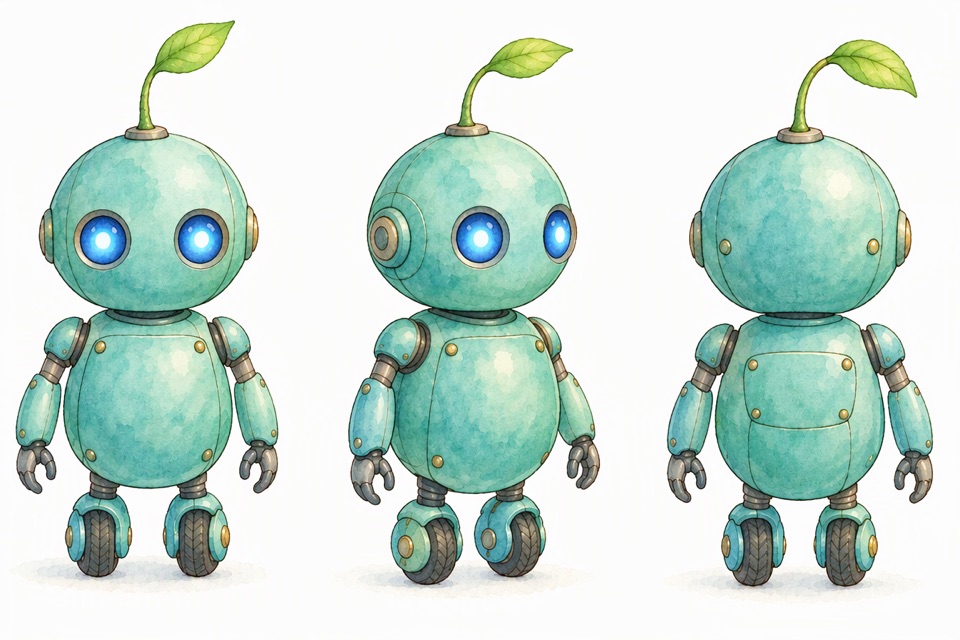
Pip's character sheet in this style, drawn before the page and used as its reference.
Watercolor gave the calmest page of the five. The storm is a grey wash with a few streaks of rain, the colors stay muted, and Pip's teal plating picks up a grainy paper texture. Edges are soft, so the eye goes to the glowing blue eyes and the bright green leaf rather than to outlines.
Consistency was the strongest here. Pip has two wheels, one leaf antenna, round ear discs and brass rivets, exactly as on the character sheet. The leaf is held in both hands and the seedling sits in a small mound of soil.
Best for ages 0 to 6: bedtime books, gentle feelings, first-word books and stories that should slow a child down. It's less suited to fast action, because soft edges make busy scenes harder to read at a glance.
Classic Picture Book: Textured, Warm and Detailed
Page text: “At noon, dark clouds gathered and the rain came pouring down. Pip held a wide cabbage leaf over the seedling like an umbrella.”
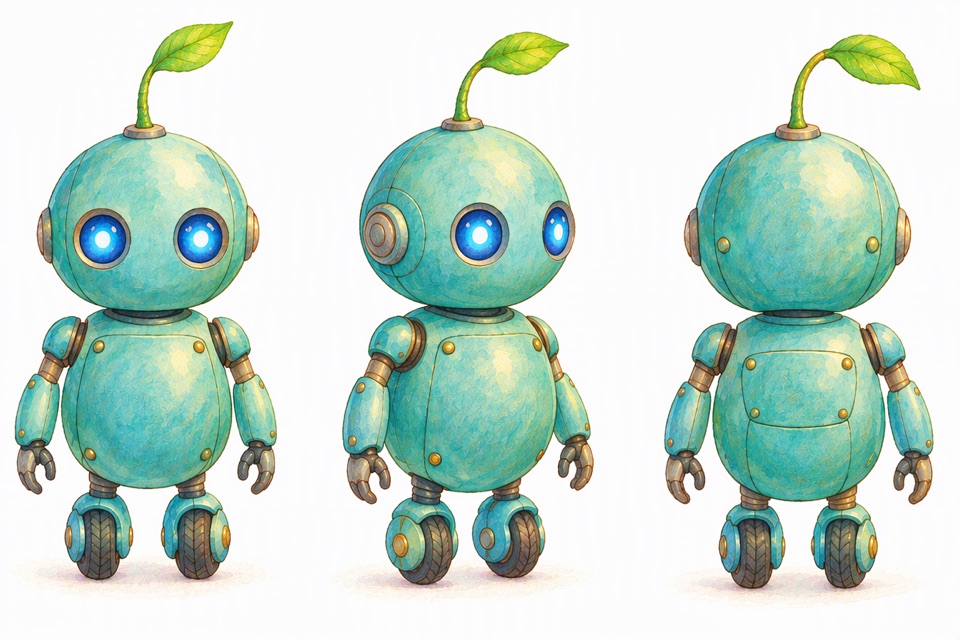
Pip's character sheet in this style, drawn before the page and used as its reference.
The classic picture book style looked the most painted. Thick, dabbed strokes cover everything, from the clouds to Pip's body, the light turns warm and golden, and it added the most background: a wooden fence, flowers and layered bushes. It reads like a traditional illustrated hardcover.
Pip's face, antenna and colors held, but this is where the body drifted most. On the page Pip rolls on extra wheels, though the character sheet shows two. If wheel count matters in your story, check this style page by page.
Best for ages 3 to 8: read-aloud picture books, gift books and stories where children like to point at small things in the scene. The extra detail rewards slow reading; it can crowd a page with a lot of text on it.
Cartoon: Bold Lines and Bright Color
Page text: “Pip held a wide cabbage leaf over the seedling like an umbrella.” “When the storm passed, a rainbow stretched over the garden.”
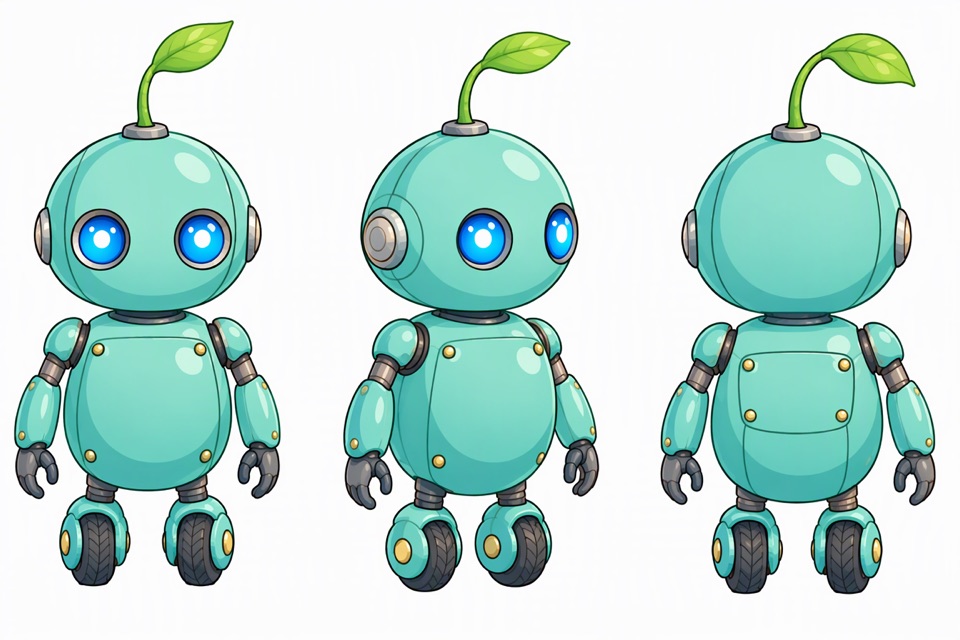
Pip's character sheet in this style, drawn before the page and used as its reference.
Cartoon is the easiest style to read from across a room. Every shape has a thick dark outline, colors are flat and saturated, and the plating has a glossy shine. The puddles, the drops on the leaf and the rocks are simplified, so nothing competes with Pip.
The face, antenna, rivets and grey hands all match the sheet. Like the picture book page, the cartoon page shows more wheels than the sheet does, and Pip holds the leaf higher, more like a real umbrella.
Best for ages 3 to 7: funny stories, early readers, classroom read-alouds and anything that will be shown on a screen or printed small. Strong outlines survive low-quality printing better than soft styles do.
Anime: Clean Lines and Glossy Light
Page text: “At noon, dark clouds gathered and the rain came pouring down. Pip held a wide cabbage leaf over the seedling like an umbrella.”
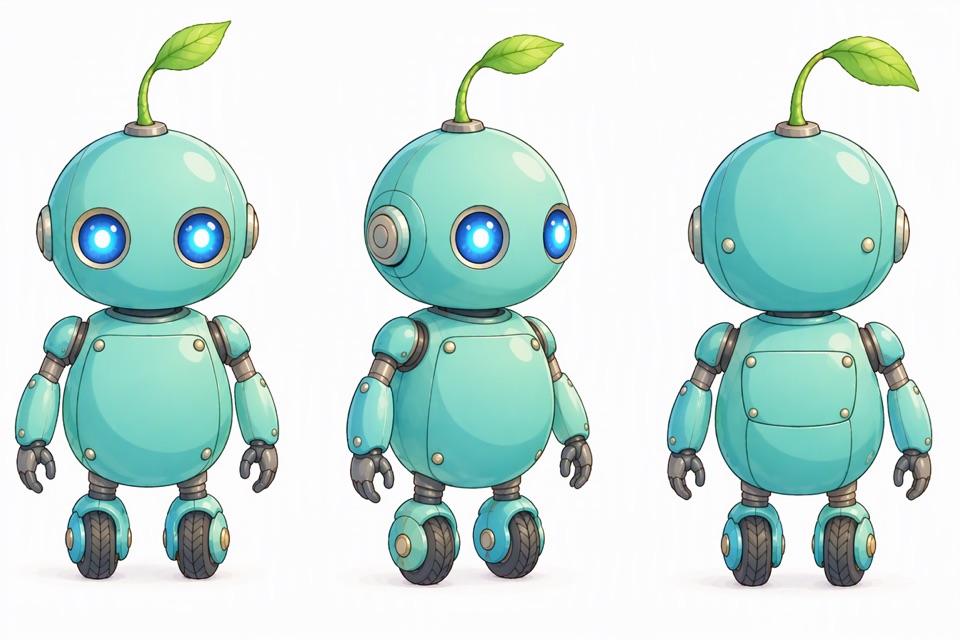
Pip's character sheet in this style, drawn before the page and used as its reference.
The anime page has the finest linework and the most light effects. Raindrops are drawn one by one, the cabbage leaf is glossy with veins and beads of water, and Pip's eyes glow the brightest of all five. The background is a bright, blurred garden rather than a dark storm.
Pip held together well: two wheels, the leaf antenna, the ear discs and the teal body all match the sheet, with the head drawn a little larger, which is typical of the style.
Best for ages 6 to 12: adventure stories, friendship stories and kids who already read manga or watch anime. For very young readers it can feel busy, and the shiny detail draws attention away from the text.
Pencil Sketch: Colored Pencil, Hatched and Moody
Page text: “At noon, dark clouds gathered and the rain came pouring down. Pip held a wide cabbage leaf over the seedling like an umbrella.”
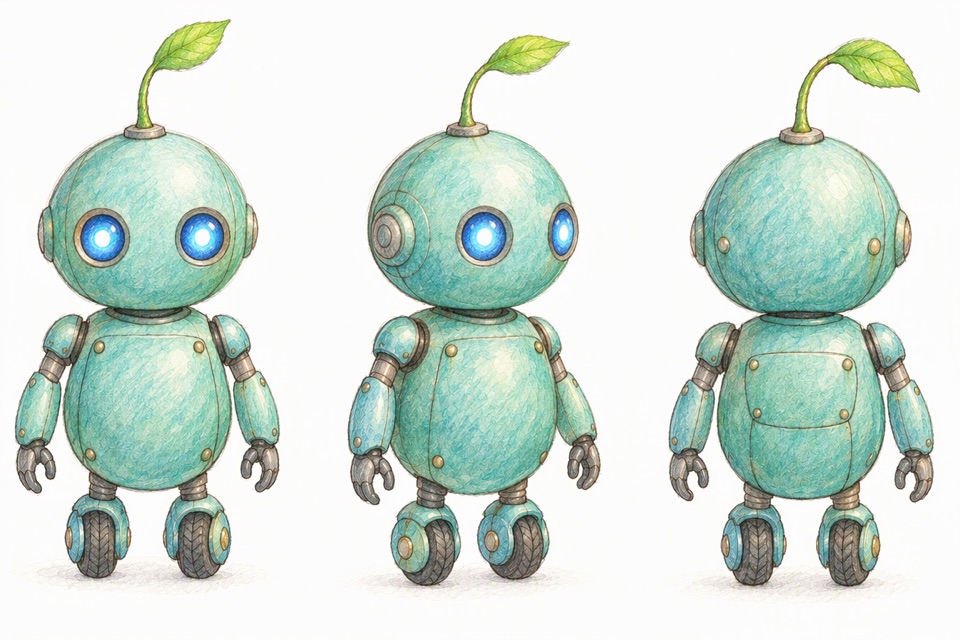
Pip's character sheet in this style, drawn before the page and used as its reference.
Our pencil sketch style came out as colored pencil, not gray graphite. You can see every hatched stroke in the sky, the rain is drawn as dark slanted lines, and the mood is the stormiest of the five. Pip is still teal, but with a hand-drawn grain over the plating.
The face, antenna and leaf held. Like the picture book and cartoon pages, it shows more wheels than the sheet, and the leaf is drawn as a big domed umbrella.
Best for ages 5 to 10: nature stories, quieter chapters, keepsake books and stories that should feel handmade. If you want a black-and-white sketch look, this style won't give you that yet.
The Five Styles at a Glance
| Style | What it looks like | What drifted on our page | Suggested ages | Good for |
|---|---|---|---|---|
| Watercolor | Soft washes, grainy paper, muted colors | Nothing we could spot | 0–6 | Bedtime, gentle feelings |
| Classic picture book | Thick painted strokes, warm light, rich background | Extra wheels | 3–8 | Read-aloud and gift books |
| Cartoon | Bold outlines, flat bright color, gloss | Extra wheels | 3–7 | Funny stories, early readers |
| Anime | Fine lines, glossy light, detailed rain | Head a little larger | 6–12 | Adventure, older kids |
| Pencil sketch | Colored pencil hatching, darker mood | Extra wheels | 5–10 | Nature and keepsake books |
The suggested ages are our editorial reading of each look, not a rule. A cartoon book can be lovely for a nine-year-old, and plenty of watercolor books are written for adults.
Reuse the Same Prompt in Any Style
You don't need a long style prompt. In the storybook generator the style is a single choice, and the words you paste only describe the story and the characters. That's what makes a fair comparison possible: change the style, keep the words.
This is the character description we saved for Pip. Swap in your own character, but keep the same habit of naming colors, shapes and one or two unusual details.
Pip: A small, round metallic robot with smooth teal plating, two bright circular blue LED eyes, and tiny mechanical wheeled feet. Pip has a small flexible green leaf antenna on top of its head and two gentle robotic arms.And this is the story we pasted, with "Keep my exact words" switched on so every book used the same sentences:
Pip the little robot rolled out of the greenhouse at sunrise. The garden was quiet, and the dew sparkled on every leaf. Pip hummed a happy tune and checked each flower, one by one.

Near the old stone wall, Pip found a tiny seedling bent low by the wind. Pip gently propped it up with a twig and a piece of string.

All morning Pip carried water in a small tin cup, back and forth along the path.

At noon, dark clouds gathered and the rain came pouring down. Pip held a wide cabbage leaf over the seedling like an umbrella.

When the storm passed, a rainbow stretched over the garden. Pip waited patiently day after day, watching the seedling grow taller.

One bright morning, a glowing blue flower opened at the top of the stem. Pip spun in a happy circle, and the flower seemed to glow even brighter, just for Pip.
The "Make it in this style" button under each picture opens the storybook generator with this story, six pages, exact words and that style already picked. Nothing is made until you press the button there.
How to Keep a Character Consistent Across Styles
Style changes the brushwork, not the character, as long as the character is pinned down before the first page is drawn. Three habits made the biggest difference in this test.
- Describe the character once, precisely. Colors, body shape, eyes and one odd detail, like Pip's leaf antenna, give every page the same anchors.
- Illustrate one page before the rest. The first time you illustrate, the book draws a character sheet with front, three-quarter and back views, and every page is drawn from it. Start with one page, look at the sheet and the page, and fix the description before you illustrate the others.
- Check the small counts. The face survived all five styles; the number of wheels didn't. Look at hands, feet, wheels and accessories on every page, because that's where styles drift.
If the same character will appear in several books, save it after the first sheet so the next book starts from the same look. Writing the story first? Our kids story generator and bedtime story generator both hand finished stories to the storybook generator.
How We Made This Comparison
We made each book once on the live site with an ordinary paid account and kept whatever came out. Each book planned six pages from the same pasted story, drew Pip's character sheet, and then drew only the rainy page shown here. That came to 7 credits per style: 1 to plan the pages, 3 for the sheet and 3 for the page. The watercolor page comes from an earlier full book with the same story and the same saved character.
We didn't pick the best of several tries, edit the prompts per style or touch up the pictures. They were only resized for this page. If a style drifted, it's described above as it happened.
FAQ
What are the most popular children's book illustration styles?
Watercolor, painted picture book art, bold cartoon, anime-influenced art and pencil or colored pencil are among the most common looks in children's books today, alongside collage, digital painting and ink. Our storybook generator offers the first five, which is why this page compares exactly those.
Which illustration style is best for toddlers?
Soft, simple pictures with one clear subject work best for the youngest readers. On our page, watercolor and cartoon kept the focus on Pip; watercolor is calmer for bedtime, and cartoon reads more easily from a distance or in small prints.
Can I keep the same character in a different style?
Yes. The face, colors and signature details carried across all five styles here, because every book started from the same saved description and reference picture. Small counts can drift, like Pip's wheels, so check them page by page and fix the description if a style keeps getting one wrong.
Do I need to write a style prompt?
No. You pick the style from five options, and your text only needs to describe the story and the characters. Leaving style words out of the story keeps the comparison fair and stops one style's words from fighting with another.
How much does it cost to try a style?
Planning a book costs 1 credit, each character sheet 3 credits and each picture 3 credits, so a six-page book with one character and a cover comes to 25 credits. To compare styles cheaply, illustrate one page per style first, as we did here, and finish the whole book in the style you like.
Try Your Character in Every Style
Paste a short story, pick a style and illustrate one page first. If it isn't the look you pictured, try the same page in another style and compare.
Read next
AI Storybook Generator
Paste a story or write one, pick one of five art styles and illustrate every page with the same characters. Edit pages, then download a PDF.
Kids Story Generator
Create a children's story with age-aware language, playful characters and a clear plot. Choose a genre and length, then turn the reviewed text into a picture book.